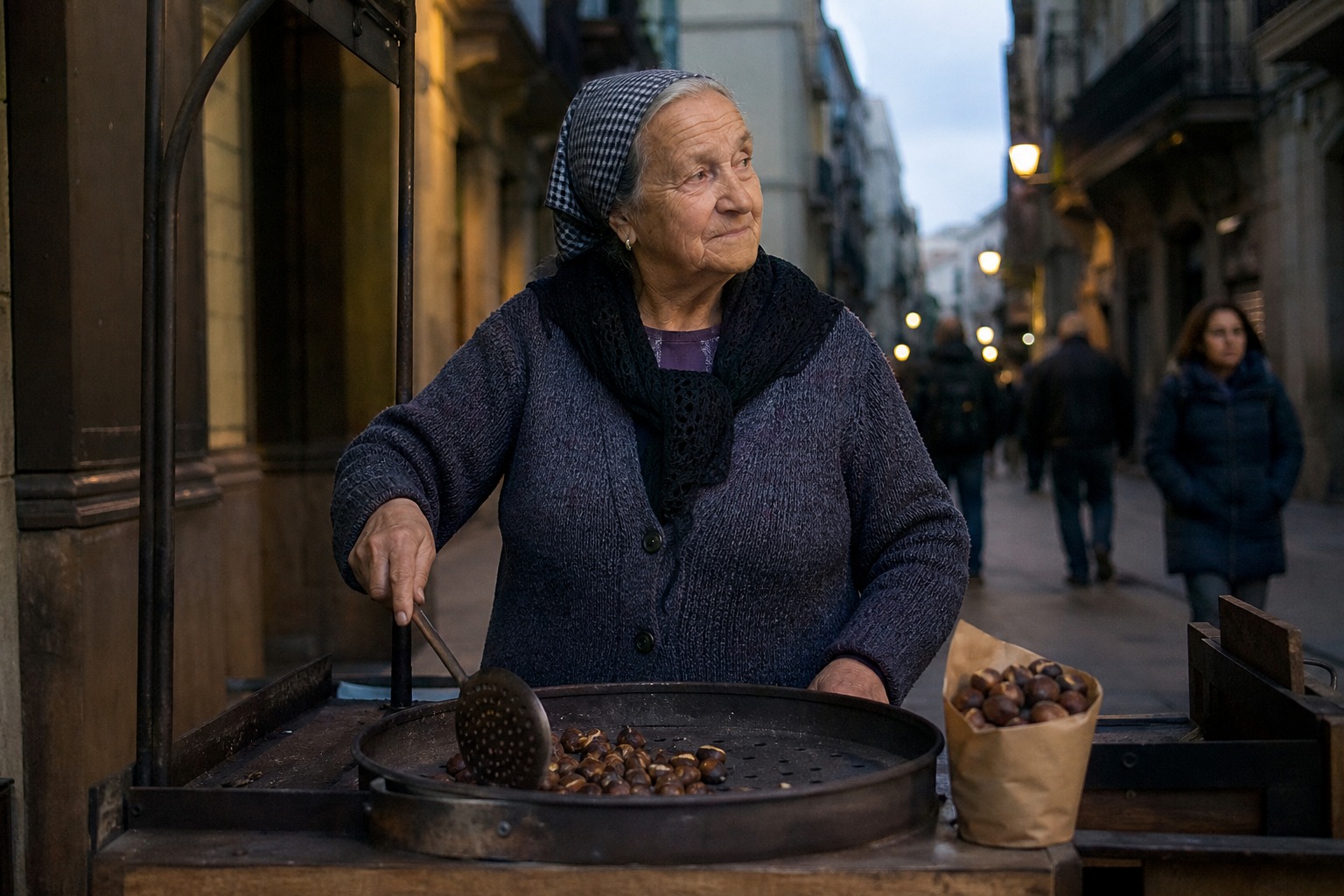

Walk through Barcelona on the last day of October and you will notice two celebrations living side by side. In one square, teenagers are rehearsing skeleton dances and shop windows are full of orange pumpkins; in the next street, a woman with an apron and a headscarf is turning chestnuts over a brazier, and every bakery smells of almonds and pine nuts. This is the moment when Halloween meets La Castanyada, Catalonia's own All Saints' tradition — older, quieter and far more delicious.
For visitors, it is the perfect time of year to be in Catalonia: one night, two worlds, and a whole cuisine you will not taste anywhere else.
Table
What is La Castanyada?
La Castanyada is the Catalan way of marking All Saints' Day (1 November) and the evening before it. Families and friends get together to eat roast chestnuts (castanyes torrades), panellets — small almond sweets covered in pine nuts — roasted sweet potatoes (boniats), preserved autumn fruits and a glass of sweet muscatel wine.
The name simply means "chestnut day": the roasted chestnut is the heart of the celebration, traditionally served in a cone of paper, warm in your hands on a cold evening.
But La Castanyada is not just a snack. Its roots go back centuries, to the funeral meals held around All Saints, when church bells rang for the dead through the night. Chestnuts, dried fruits and sweet wine were the food of those vigils — a humble, seasonal meal shared with family while remembering the people who were no longer at the table. That double meaning, autumn harvest and remembrance, is still what the night is about in Catalan homes.
The castanyera, the soul of the streets
From mid-October, and especially on the days before 1 November, you will meet the castanyera: a street seller — traditionally imagined as an elderly woman in a shawl and headscarf — standing behind a small wooden stall with a charcoal brazier, roasting chestnuts and selling them in paper cones alongside roasted sweet potatoes.
The castanyera is one of the most beloved figures of Catalan autumn. You will find her stalls in Barcelona's old town and neighbourhood squares (the Gràcia district is famous for them), in markets and in towns across Catalonia. Buy a cone of chestnuts, peel them as you walk, and you have joined the tradition — no ticket required.
Panellets: the sweet of All Saints
If chestnuts are the heart, panellets are the treat. They are small balls of almond paste (with sugar, egg and often potato), covered in toasted pine nuts — the classic version — or in coconut, chocolate, coffee or candied fruit. Bakeries and pastisseries all over Catalonia start filling their windows with them from the second half of October, alongside ossos de sant ("saints' bones", almond sweets shaped like bones) and glazed seasonal fruit.
Panellets are the perfect souvenir to bring home: they travel well, they are made for this exact week, and every pastry shop has its own recipe. Ask for a mixed box and a bottle of muscatel, and you have the complete Castanyada dessert.
So what about Halloween?
Halloween is a new arrival in Catalonia — it only became popular in the 1990s, brought by American films and TV — but it has taken root fast, especially among young people: costume parties, decorated shop windows, themed dinners and nightlife in every city.
The two traditions are not rivals so much as neighbours:
| La Castanyada | Halloween | |
|---|---|---|
| Origin | Medieval funeral meals and All Saints' Day | Celtic Samhain, via Ireland and the USA |
| When | 31 October – 1 November | 31 October |
| Food | Roast chestnuts, panellets, sweet potato, muscatel | Sweets and candy |
| Mood | Family, home, remembrance | Costumes, parties, scares |
| Symbols | The castanyera, paper cones, autumn fruits | Pumpkins, skeletons, witches |
Notice what both share, though: the same dates, the same season of harvest and long nights, and the same old idea at the root — that these days belong to the dead as much as to the living. Halloween makes it a masquerade; La Castanyada keeps it a family meal.
If you are travelling with children, you can happily do both: a castanyera stall and a box of panellets in the afternoon, trick-or-treating or a costume party at night.
Where to experience La Castanyada in Catalonia
- Barcelona, old town and Gràcia — street castanyera stalls from late October, bakeries full of panellets, and neighbourhood celebrations in Gràcia's squares.
- Fira de Tots Sants de Vic — the great All Saints fair in the town of Vic (an hour from Barcelona), with livestock, food, crafts and chestnuts; one of Catalonia's oldest fairs, held over the weekend closest to 1 November.
- Any village in the interior — many towns organise a castanyada popular: a community chestnut roast in the main square, often with roasted sweet potatoes and sweet wine for everyone.
- Pastry shops, everywhere — if the weather turns, do the delicious version of the tradition: a tasting tray of panellets, ossos de sant and muscatel at the counter.
A quiet way to end the night
Visitors are often surprised that the real Catalan tradition has no costumes and no scares — it is about peeling chestnuts together, drinking a little too much muscatel, and talking about the people who are missed. In a country that has kept its own way of doing things for centuries, that mix of the tender and the ordinary is the point.
So this 31 October, when the pumpkins come out, do as the Catalans do: buy a paper cone of hot chestnuts from the castanyera on the corner, find a square, and toast to both worlds — the spooky one and the sweet one.
If you want to know other articles similar to La Castanyada vs Halloween: Catalonia's Own Way to Celebrate All Saints you can visit the Gastronomy category.


