
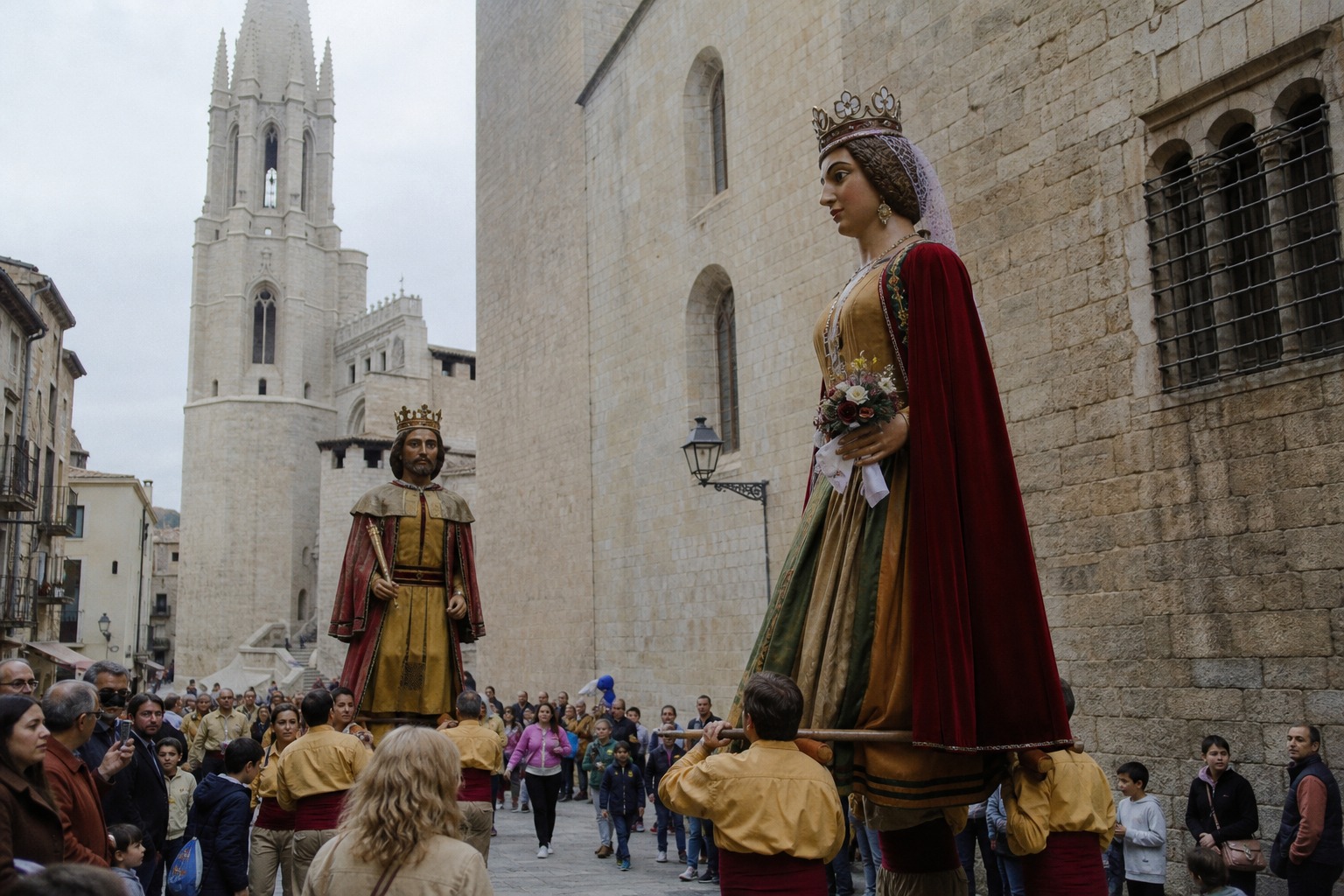

Every year in late October, while most of the world is decorating pumpkins, the city of Girona throws the biggest party of its year: the Fires de Sant Narcís, the festival of its patron saint. For ten days the streets fill with giants, drummers, human towers and the smell of roasted food, the parks turn into a funfair, and locals eat and dance outdoors late into the night.
If you are in Barcelona in late October, this is one of the best day trips in Catalonia — and in 2026 the dates could not be better: the Fires run from 23 October to 1 November, right over the Halloween week.
Table
Who was Sant Narcís? (and why flies?)
Sant Narcís (Saint Narcissus) was a bishop of Girona in the early centuries of Christianity, and the city has honoured him as its patron saint for centuries. His tomb, in the Collegiate Church of Sant Feliu — the slim Romanesque church with the pointed bell towers you can see from almost anywhere in the old town — is one of Girona's most visited corners.
The legend that ties him to the festival is gloriously odd. In 1285, during the French invasion of Catalonia, Girona was besieged and the invading troops sacked the church and opened the saint's tomb. From it burst a swarm of flies — the mosques de Sant Narcís — which attacked the soldiers and their horses until the invaders retreated. Ever since, the fly has been an unlikely emblem of the city: you will spot it carved in stone, painted in stained glass and printed on festival posters.
It is a legend, not documented history — but it is the story every child in Girona grows up with, and it explains why the city's biggest celebration carries the name of a saint associated with a swarm of very patriotic insects.
What the Fires are today
What began as a saint's day market in the 19th century is now a full-blown urban festival: ten days of free open-air culture, music and tradition, with the central day on 29 October, Sant Narcís itself.
The streets of the old town, the Rambla and the Devesa park host hundreds of events, and almost everything is free. These are the things worth planning your visit around:
- Gegants i capgrossos — the parade of giants and big-heads: towering papier-mâché kings, queens and saints dancing through the old streets to the sound of gralla drums. The opening cercavila (parade) kicks the festival off.
- Correfoc — the fire run: devils with pitchforks and fireworks dancing through the crowd after dark. Spectacular and loud; bring a cap and closed clothes, and stand back if you are coming with children.
- Castellers — human towers, one of the most breathtaking Catalan traditions, usually built in the city centre.
- Sardanes — the traditional Catalan dance, danced in the Devesa gardens by people of every age, with a public aplec (gathering) that is the most Girona thing you can witness.
- Concerts — free open-air concerts every night in the festival grounds.
- The funfair — rides and cotton candy in the Parc de la Devesa, one of Catalonia's largest urban parks.
- Gastronomy — food tents and local producers serving tapas, grilled meats and festival sweets, plus the popular open-air breakfasts (esmorzars populars) that locals queue for on festival mornings.
Practical information (2026)
| Dates 2026 | 23 October – 1 November (central day: Wednesday 29 October) |
| Where | Girona city centre: old town, Rambla, Plaça del Vi, Parc de la Devesa |
| Opening | 23 October, from 17:30 with parades around the city |
| Price | Almost everything is free; tickets only for some concerts and the funfair rides |
| Programme | Official programme at girona.cat/firesdegirona |
Getting there: an easy day trip from Barcelona
Girona is about 40 minutes from Barcelona by high-speed train (AVE, Avlo and Avant from Sants and Passeig de Gràcia), or around an hour and a quarter on the regional trains. Trains run frequently, but during the Fires they fill up — book and travel early in the day.
Once you are there, everything happens on foot: the station is a five-minute walk from the old town, and the festival venues are all within a fifteen-minute walk of each other.
If you can, make it a weekend rather than a day trip: Girona deserves more than the festival. The city has one of the best-preserved Jewish quarters in Europe, the Cathedral with the widest Gothic nave in the world, the colourful houses hanging over the River Onyar, and — for fans — a good number of the Game of Thrones filming locations from season six. The Festival dinners aside, the restaurant scene here is excellent and much cheaper than Barcelona's.
A few tips
- The central day is 29 October, with the main parades and the atmosphere at its peak — but also the biggest crowds. If you prefer space, come on the first weekend or the last days.
- Correfoc is not for everyone: it is intense, with fireworks at street level. Families with small children usually prefer the daytime correfoc infantil or the giants' parades.
- Wear layers: late October in Girona is mild by day and cool at night, and you will be outdoors for hours.
- Book ahead: hotels fill up during the Fires, and restaurants in the old town get busy at weekend dinner times.
Why it is worth it
Halloween has its own charm, but the Fires de Sant Narcís are something rarer: a festival that belongs entirely to the city that throws it. There is no ticket queue, no commercial backdrop — just giants dancing past Romanesque churches, grandparents dancing sardanes next to teenagers waiting for the concert, and a patron saint who, legend says, defended his city with a swarm of flies.
Come for one afternoon and you will understand why Girona counts these ten days as the best of its year.
If you want to know other articles similar to Fires de Sant Narcís 2026: Girona's Biggest Festival (and Its Legend of the Flies) you can visit the Towns category.


