
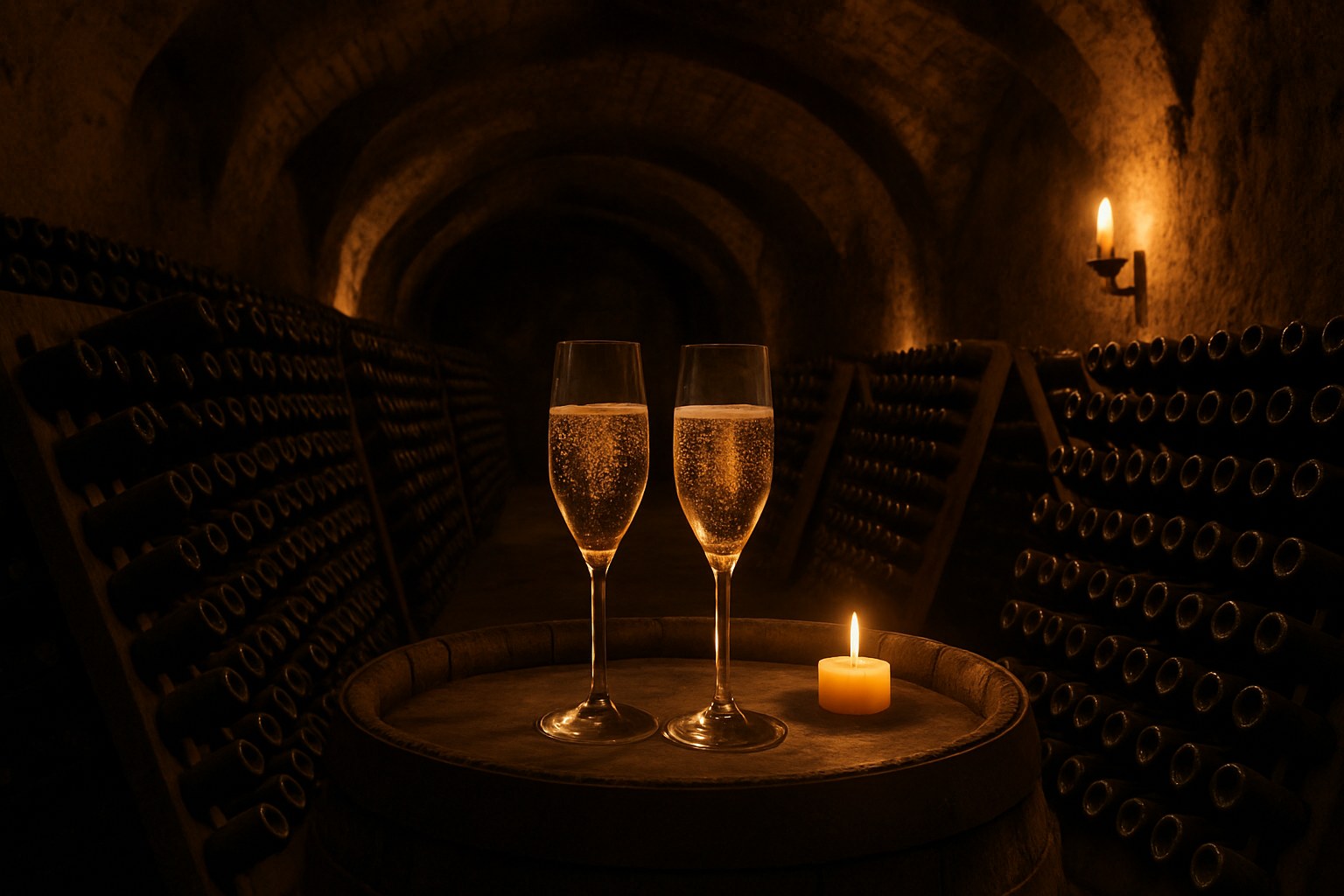

Cava country starts less than an hour from Barcelona, and that is the whole appeal: a town built on top of kilometres of underground cellars, tastings that cost about as much as a cinema ticket, and a train that leaves you a ten-minute walk from the first bottle. Here are the cava wineries worth your time around Sant Sadurní d'Anoia, how a cava tour works, and how to put the day together on your own instead of on a coach.
Table
First, what exactly is cava?
Cava is a sparkling wine made by the traditional method — the wine does its second fermentation inside the very bottle you drink from, exactly as in Champagne — but from Mediterranean grapes, above all macabeu, xarel·lo and parellada. It is fresher and fruitier than most Champagne and, at entry level, cheaper. It has its own protected designation of origin, and its historic heart is Sant Sadurní d'Anoia, where the first cava was bottled in 1872.
If you want the full story — the grapes, the sweetness scale from Brut Nature to Dulce, what Reserva and Gran Reserva mean — read our guide to cava, Catalonia's sparkling wine. This page is about the part you can drink.
Sant Sadurní d'Anoia, the cava capital
A large share of all the cava made in Spain comes out of the cellars beneath this one town and its surroundings, which is why every big name has its headquarters here. The centre is small and walkable, the main houses sit a few minutes apart, and the tourist office keeps a list of which cellars receive visitors.
Getting there from Barcelona
Take the R4 Rodalies train from Barcelona-Sants straight to Sant Sadurní d'Anoia: direct, roughly 45 to 55 minutes, about twice an hour, and a single ticket costs a few euros. The station is a flat ten-minute walk from the centre.
Do not confuse it with the FGC line: the R5 from Plaça d'Espanya climbs up to Montserrat, not to the cava towns. By car the trip takes about 45 minutes, which is the more comfortable option if you plan to continue to Montserrat afterwards — though the designated driver should stick to the spittoon.
The wineries worth visiting
Codorníu: the modernista cathedral
Codorníu is the architectural headline of the Penedès. The complex was designed by Josep Puig i Cadafalch, one of the great names of Catalan Modernisme, and its red-brick façade with stepped gables was declared a national monument in 1976. The interesting part is underneath: a vast network of underground galleries where millions of bottles rest, crossed partly on a small automated train. Visits run daily and must be booked in advance; they last about 90 minutes to two hours, with guided and self-guided audio options in English. It is a 20 to 25 minute walk from the station.
Freixenet: the famous one
Freixenet is the name most people know from the black bottle, and its visit is the most polished of the large houses: a guided tour of about 90 minutes that runs daily, requires an advance reservation and is offered in several languages. It sits right in the centre of town, a few minutes from the station, which makes it the easiest cellar to fit around a train timetable.
Recaredo and Gramona: the long-ageing Corpinnat houses
For a more serious glass, aim at the producers behind Corpinnat, the seal created in 2019 by wineries that left the DO to impose stricter rules: organic grapes, hand harvesting and long ageing. Recaredo, on Carrer de Tamarit in the town centre, works biodynamically, turns and disgorges every bottle by hand and lets its wines age for years; visits are small and must be reserved through its website. Gramona, a few streets away, is another founding name of the group and one of the references for long-aged cava, and arranges visits on request. Expect smaller groups, a longer conversation about viticulture and a higher price — and a very different wine.
Small family cellars
Some of the best cava you will taste here is poured by producers whose labels never reach a supermarket shelf. These houses often have no online booking: the tourist office and the regional Penedès wine tourism office keep the list of who opens their doors, and many will welcome you if you email ahead.
How a cava tour works
The structure is similar everywhere: you walk through the production area, descend into the cellars where the bottles rest at a constant cool temperature, hear how riddling and disgorging work, and finish with a tasting of two or three wines. Count on 90 minutes to two hours.
Prices scale with what ends up in the glass. The large houses start in the low tens of euros for a standard visit, while the long-ageing specialists charge several times that for tastings built around Reserva and Gran Reserva. Almost everyone requires a reservation, and weekend slots disappear days ahead, so book on the winery's own site, or by email for the small ones.
And do not be shy about spitting: the spittoons are there for exactly that, especially if you are doing more than one visit in a day.
When to go
Because the cellars are underground, Sant Sadurní works all year round, and it is one of the best-value days out in the region in the colder months. Spring and autumn are the most comfortable for walking between houses, and September is the harvest, when the surrounding vineyards are at their most photogenic. The first weekend of October brings Cavatast, the cava and gastronomy fair that fills the streets with tasting stands — book accommodation well ahead, because the town fills up. Before you fix the dates, check our calendar of public holidays in Catalonia: on the main ones some cellars cut their hours or close altogether.
Making a day of it
Can you combine cava and Montserrat?
Easily, if you have a car: the monastery is about 40 minutes away by road and the two together make the classic Penedès day out. By public transport it is awkward, because the trains leave from different Barcelona stations, so on a car-free day pick one and save the other; our guide to Montserrat covers the logistics.
Lunch
Plan a proper lunch between visits: the Penedès eats well, from calçots in season to xató, and plenty of cellars will pour a glass of what they sell with it. For dessert, crema catalana is on practically every menu in town.
Frequently asked questions
How do I visit the cava wineries from Barcelona without a car?
Take the R4 Rodalies train from Barcelona-Sants to Sant Sadurní d'Anoia: direct, about 45 to 55 minutes, roughly twice an hour and a few euros each way. Most of the main wineries are within walking distance of the station.
How much does a cava tour cost?
Standard visits at the large houses start in the low tens of euros and include two or three tastings; self-guided audio tours are the cheapest option. The long-ageing Corpinnat producers charge noticeably more.
Do I need to book a cava tour in advance?
Yes, in almost every case. The big houses sell timed tickets online and the small ones prefer email. Weekend slots fill first, so book at least a few days ahead.
What is the best time of year for a cava tour?
Any time, since the cellars are underground and the weather barely matters. Spring and autumn are the most pleasant for walking between wineries, September brings the harvest and early October brings the Cavatast fair.
Are cava wineries suitable for children?
The tastings are for adults, but the tour itself is a walk through cellars and machinery that children usually find fun, and some large houses run family visits with grape juice. Ask when you book.
Which cava winery should I visit first?
For the spectacle, start at Codorníu and its modernista cellars. For the name you already know, go to Freixenet. For the best wine in the glass, book Recaredo or Gramona.
{"@context":"https://schema.org","@type":"FAQPage","mainEntity":[{"@type":"Question","name":"How do I visit the cava wineries from Barcelona without a car?","acceptedAnswer":{"@type":"Answer","text":"Take the R4 Rodalies train from Barcelona-Sants to Sant Sadurni d Anoia: direct, about 45 to 55 minutes, roughly twice an hour and a few euros each way. Most of the main wineries are within walking distance of the station."}},{"@type":"Question","name":"How much does a cava tour cost?","acceptedAnswer":{"@type":"Answer","text":"Standard visits at the large houses start in the low tens of euros and include two or three tastings; self-guided audio tours are the cheapest option. The long-ageing Corpinnat producers charge noticeably more."}},{"@type":"Question","name":"Do I need to book a cava tour in advance?","acceptedAnswer":{"@type":"Answer","text":"Yes, in almost every case. The big houses sell timed tickets online and the small ones prefer email. Weekend slots fill first, so book at least a few days ahead."}},{"@type":"Question","name":"What is the best time of year for a cava tour?","acceptedAnswer":{"@type":"Answer","text":"Any time, since the cellars are underground and the weather barely matters. Spring and autumn are the most pleasant for walking between wineries, September brings the harvest and early October brings the Cavatast fair."}},{"@type":"Question","name":"Are cava wineries suitable for children?","acceptedAnswer":{"@type":"Answer","text":"The tastings are for adults, but the tour itself is a walk through cellars and machinery that children usually find fun, and some large houses run family visits with grape juice. Ask when you book."}},{"@type":"Question","name":"Which cava winery should I visit first?","acceptedAnswer":{"@type":"Answer","text":"For the spectacle, start at Codorniu and its modernista cellars. For the name you already know, go to Freixenet. For the best wine in the glass, book Recaredo or Gramona."}}]}
If you want to know other articles similar to Cava Wineries in Catalonia: How to Plan the Perfect Cava Tour you can visit the Country category.


