
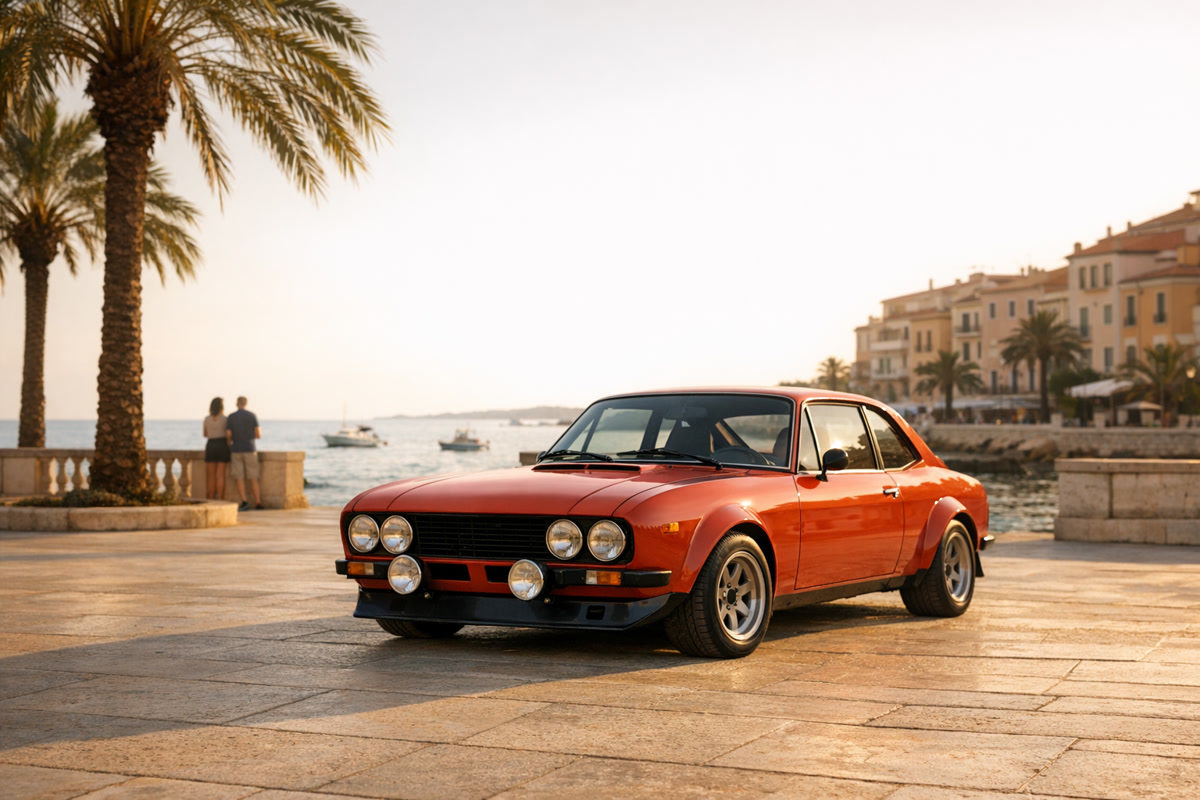

If you are anywhere near the Girona coast this weekend, keep an ear out for the burble of old carburettors. The 23rd Costa Brava Historic Rally — the Rally Costa Brava Històric, to give it its proper name — is running right now, from 29 October to 1 November 2026, and Sant Feliu de Guíxols is once again its starting point and beating heart. With 104 crews entered and close to 1,000 kilometres of road ahead of them, the rally turns one of the prettiest seafronts on the Costa Brava into a free, open-air classic car show.
It is one of the quiet highlights of the autumn calendar — we flagged it in our weekly round-up of things to do in Catalonia — and unlike most motorsport, you need neither a ticket nor any knowledge of lap times to enjoy it.
Table
- Sant Feliu de Guíxols: your front-row seat
- What exactly is a regularity rally? (and why nobody is racing)
- 1,000 kilometres, 25 sections and a secret itinerary
- The cars: from pre-1970 veterans to 90s youngtimers
- How to watch it without spending a euro
- Practical information (2026)
- Why it is worth it (even if you are not a petrolhead)
- Frequently asked questions
Sant Feliu de Guíxols: your front-row seat
The first two stages of the rally set off from the Passeig del Mar, the elegant palm-lined promenade that runs along the town's bay. Before each leg, the cars are lined up right there on the seafront, bonnets up, crews fussing over maps and stopwatches, and the organisers confirm the whole pre-start park is free to wander around. It is motorsport at conversation distance: no fences a hundred metres back, just you, an ice cream and a 1960s berlinetta idling two metres away.
Scrutineering, the technical checks every car must pass, takes place next door at the Espai Carmen Thyssen — the town's art museum, itself worth the detour for its Catalan and Spanish painting collection. If you have never visited Sant Feliu de Guíxols, the rally is the perfect excuse: an old Benedictine monastery, a working fishing past, and a Camí de Ronda coastal path that threads some of the least crowded coves on the whole Costa Brava.
The final podium and prize-giving wrap things up on Sunday 1 November.
What exactly is a regularity rally? (and why nobody is racing)
Do not expect tyre smoke. The Costa Brava Historic Rally is a regularity event run under FIVA and FEVA rules, the international and Spanish bodies for historic vehicles. Each crew must maintain an average speed set by the organisers — usually around 50 km/h — over secret sections of public road, and penalties come from arriving at hidden time controls either too early or too late. It looks gentle and is quietly brutal: the winning crews measure their margins in single seconds over three days.
The event is the classic-car sibling of the Rally Costa Brava, the Girona rally first held in 1953 that grew into one of Spain's most legendary motorsport events. The historic edition, now in its 23rd year and organised by the RallyClassics club, keeps those same roads alive with the machines that made them famous.
1,000 kilometres, 25 sections and a secret itinerary
Here is the part rally fans love: the route is secret. Sections are published to crews on the Sportity app just fifteen minutes before each start, handed to the first car and to nobody else. What we do know is the shape of it:
- Around 1,000 km split into three legs, with 25 regularity sections in total, several of them brand new this year.
- Plenty of night driving, which is exactly as atmospheric as it sounds — old headlamps carving through the dark lanes of the Baix Empordà.
- A gastronomic streak that is very Catalan: the route calls at the Michelin-starred Ca l'Enric in the Vall de Bianya and at the Domaine de Rombeau winery just across the French border in Roussillon.
- Saturday is the etape reina, the queen stage, based in Empuriabrava, near the canals and the skydiving drop zone. It also hosts the one-day Rally-Sprint format, a shorter, ~11-hour event capped at 50 crews that starts and finishes there.
The cars: from pre-1970 veterans to 90s youngtimers
Entries are capped at 130 teams, and the classes tell the story of half a century of motoring. Antics covers cars built up to 1970, the FIVA-rated veterans that draw the biggest crowds. Històrics runs to 1980, Clàssics to 1990, and a Youngtimer class accepts cars built up to November 2001 — which, slightly painfully, means some of the "classics" are younger than several crew members' children.
This year 104 teams made the start. Expect a paddock of modest family saloons, giant-killing tiny coupés and the odd exotic, all wearing the dust and dusk of three days on open roads.
How to watch it without spending a euro
This is the best part: everything worth seeing is free.
- Walk the pre-start park on Sant Feliu's Passeig del Mar while the cars are parked — early morning or late afternoon are the quietest times to peer under bonnets.
- Catch a start, with engines running and crews counting down, right on the seafront.
- Head to Empuriabrava on Saturday for the queen stage and the Rally-Sprint field, with free access to the paddock areas around the Karting Empuriabrava circuit.
- Follow the live timings on mirally.es if you want to know who is winning while you watch.
- Respect the road: stages run on open public roads, closures are brief, and locals still need to get home. Stand somewhere safe, never block the tarmac, and follow the marshals' instructions.
Practical information (2026)
- When: 29 October – 1 November 2026 (prize-giving Sunday 1 November).
- Where: start and pre-start park on the Passeig del Mar, Sant Feliu de Guíxols; Saturday base in Empuriabrava (Castelló d'Empúries).
- Getting there: Sant Feliu is about 40 minutes' drive from Girona and just over an hour from Barcelona. Empuriabrava adds another 50 minutes north, close to Cadaqués and Cap de Creus.
- Live results: mirally.es. Route and entries: rallyclassics.club.
- Stay for the surroundings: Tossa de Mar is twenty minutes down the coast and makes a perfect base.
Why it is worth it (even if you are not a petrolhead)
Late October is the Costa Brava at its best: the summer crowds gone, the sea still warm, the light going golden at five in the afternoon. Into that slow weekend drops a rolling museum of a hundred cars, free to watch, parked metres from the Mediterranean. You do not need to care about camshafts to enjoy a sunset drink on the Passeig del Mar while a forty-year-old engine ticks itself cool. That is the whole trick of this rally — it gives you a reason to be in one of the loveliest towns in Catalonia at the loveliest time of year.
And if you miss this edition, the rally traditionally runs on the last weekend of October or the first of November. Put it in next year's diary now.
Frequently asked questions
When is the Costa Brava Historic Rally 2026?
From Thursday 29 October to Sunday 1 November 2026, with the first two stages starting in Sant Feliu de Guíxols and the prize-giving on Sunday 1 November.
Where can I see the cars for free?
The pre-start park and podium on the Passeig del Mar in Sant Feliu de Guíxols are free to visit, and the same applies to the Empuriabrava areas used for Saturday's queen stage and the Rally-Sprint.
What is a regularity rally?
A regularity rally is not a race. Crews must hold a set average speed — around 50 km/h here — over secret sections of public road, with penalties for passing hidden time checks either too early or too late.
Can anyone take part?
Yes, with an eligible classic car. Classes cover vehicles from pre-1970 veterans up to youngtimers built before November 2001, and registration opens each autumn through the rallyclassics.club website.
{
"@context": "https://schema.org",
"@type": "FAQPage",
"mainEntity": [
{
"@type": "Question",
"name": "When is the Costa Brava Historic Rally 2026?",
"acceptedAnswer": {
"@type": "Answer",
"text": "It runs from Thursday 29 October to Sunday 1 November 2026. The first two stages start in Sant Feliu de Guixols and the prize giving takes place on Sunday 1 November."
}
},
{
"@type": "Question",
"name": "Where can I see the classic cars for free?",
"acceptedAnswer": {
"@type": "Answer",
"text": "The pre-start park and the podium on the Passeig del Mar seafront in Sant Feliu de Guixols are free to visit, and the same applies to the Empuriabrava areas used on Saturday for the queen stage and the Rally-Sprint."
}
},
{
"@type": "Question",
"name": "What is a regularity rally?",
"acceptedAnswer": {
"@type": "Answer",
"text": "A regularity rally is not a race. Crews must maintain an average speed set by the organisers, usually around 50 km/h, over secret sections of public road, and penalties come from reaching hidden time controls too early or too late."
}
},
{
"@type": "Question",
"name": "Can anyone take part in the Costa Brava Historic Rally?",
"acceptedAnswer": {
"@type": "Answer",
"text": "Yes, with an eligible classic car. Classes cover vehicles from pre-1970 veterans up to youngtimers built before November 2001, and registration opens each autumn through the rallyclassics.club website."
}
}
]
}
If you want to know other articles similar to Costa Brava Historic Rally 2026: 104 Classic Cars Take Over Sant Feliu de Guíxols you can visit the Costa Brava category.


